
CommsKit Case Study: Vector Logistics
Logistics internal communications: how Vector Logistics reached over 5,500 people through a change of ownership
ABOUT
Vector Logistics is a logistics business operating across Sub-Saharan Africa, with a substantial refrigerated and cold-chain operation. The company was acquired by A.P. Møller Capital, a Danish investment firm, bringing new ownership and new leadership to a workforce of 5,500 people.
SECTOR
WORKFORCE
5,500+
LOCATION
Botswana
Namibia
South Africa
Zambia
TLDR
Logistics internal communications had no inherited system at Vector Logistics: when the company changed ownership there was no channel map, no documented route from leadership to a depot floor, and no work email for most of the workforce. We (then Halo Media, now CommsKit) mapped the channels from scratch through stakeholder interviews, rebuilt the brand around them, then built the employer brand on top. The work covered 5,500 people across more than 20 depots in four countries.
What happens to internal communications when a logistics business changes hands?
The previous owners left no internal communications system behind. No channel map, no documented route from leadership to a depot floor, no record of which sites received what. Before anything could be said to the workforce about the change, we had to establish how anything reached them at all.
Vector Logistics had been acquired by A.P. Møller Capital, a Danish investment firm. New ownership brought new leadership, and with it the questions that follow any change of hands at that scale: what changes, what stays, and what does this mean for my job.
The company employed more than 5,500 people across more than 20 depots in Namibia, Botswana, South Africa and Zambia. Many of them – drivers, packers, refrigeration technicians, maintenance crews, supply chain staff – had no work email address.
2,300 workers
Top 10 Global Producer
50 years mining

How do you reach a workforce that mostly has no email?
Channel mapping is the exercise of documenting every route by which information reaches a workforce: who owns each route, who it reaches, who it misses, and where it stops. Vector Logistics had none of this written down. We built it from stakeholder interviews within the business, combined with what we already knew about how logistics operations run day to day.
The workforce was not one audience. A long-haul driver, a refrigeration technician and a packing line operator work different shifts, enter the site at different points, and stay still for different lengths of time. Literacy levels varied across the four countries. A message that reads well on a head office screen does not survive the journey to a depot noticeboard at shift change.
Underneath the practical problem sat a trust problem. Uncertainty during a change of ownership fills whatever space is left by silence, and the space here was structural rather than anyone's oversight – there was no reliable way for leadership to be heard consistently at every site.
Rebuilding logistics internal communications from the channel up
The work ran in three phases, in a deliberate order: the brand first, then the communications, then the employer proposition built on both.
Phase 1 – The rebrand
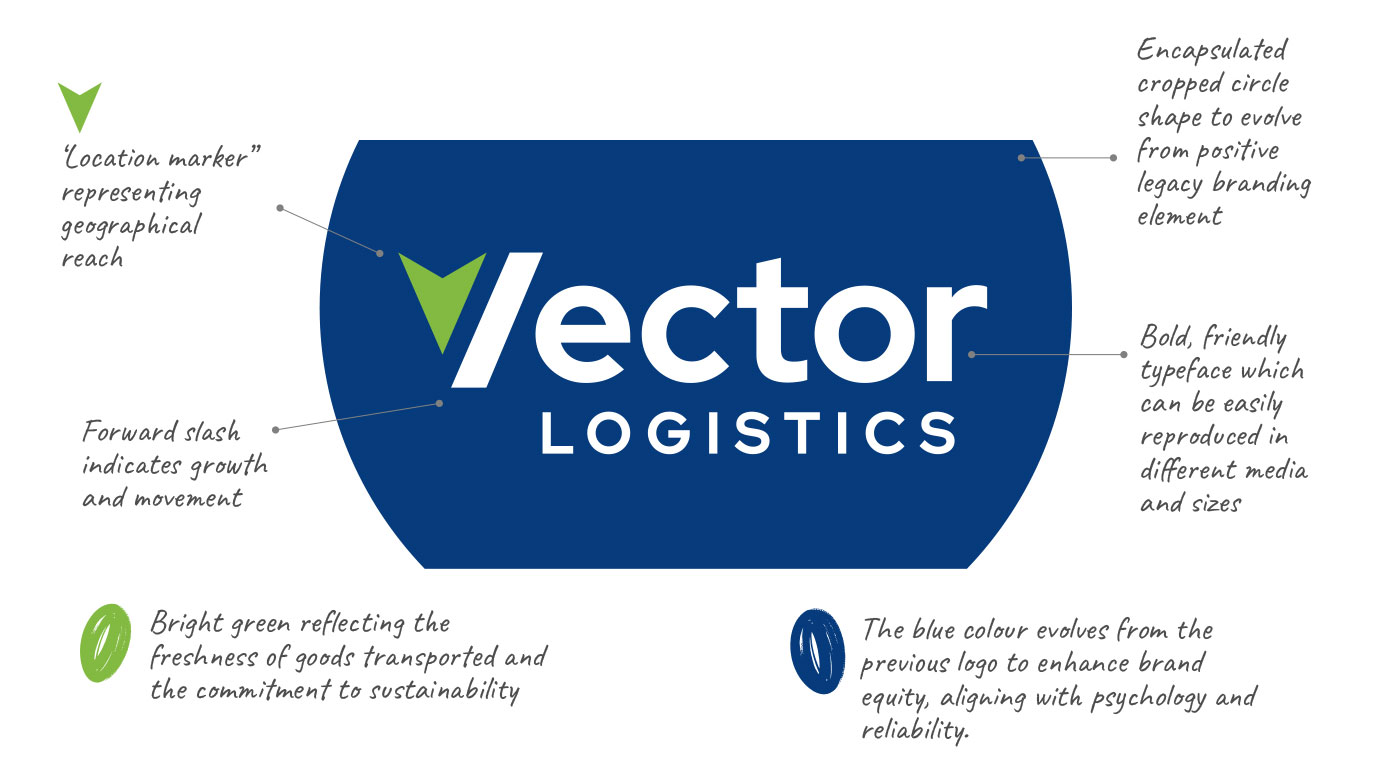
The identity came first because everything else would carry it. We redesigned the logo while keeping the encapsulation lozenge that made the company recognisable to its own people, introduced a colour palette with a green that signalled the refrigerated side of the business, and built a typography and styling system researched against sector competitors. Brand guidelines followed, covering digital and physical application – necessary when the same identity has to work on a truck door, a depot wall and a uniform.
Phase 2 – Internal communications
With the identity settled, we mapped the channels. That meant establishing, site by site, how information physically reached people: who briefed whom, where notices were posted, which shifts saw what, and at which point the route stopped. The plan came out of the map. Change and awareness campaigns covered the ownership transition. HR communications were standardised so that a message read the same in Windhoek as in Gaborone. Environmental branding went into offices and depots. Content templates meant the internal team could produce material without starting from a blank page each time.
Phase 3 – Employer branding
The third phase turned the internal work into something permanent. We developed an employer brand strategy and produced the documents behind it: an employee handbook, a company playbook, onboarding guides, and learning and development materials. Training spaces, careers pages and LinkedIn branding extended the same system to people who had not joined yet.

Scope delivered
Across the engagement, the scope at Vector Logistics maps to three CommsKit modules:
KITS (BrandKit and DesignKit) – logo redesign retaining the encapsulation lozenge, colour palette, typography and styling system, brand strategy, brand guidelines, and the rollout across fleet, depots, uniforms and merchandise
BOOST – website redesign, intranet design, bespoke campaigns
ENGAGE – channel mapping across more than 20 depots, stakeholder interviews, change and awareness campaigns for the ownership transition, standardised HR communications, office and depot environmental branding, and content templates for the internal team
ONBOARD – employee handbook, company playbook, onboarding guides, learning and development materials, training space design, careers pages and LinkedIn employer branding

What changed at Vector Logistics
A documented channel map existed where none had before, covering more than 20 depots across four countries.
Communications reached the frontline through routes chosen for each site rather than routes assumed to work. One identity was applied across fleet, depots, uniforms and merchandise, with execution kept in-house so that a truck rebranded in Zambia matched a depot sign in South Africa. HR and learning materials were standardised into one set of documents used across all four countries.
The employer brand materials – handbook, playbook, onboarding guides, careers pages – exist as a permanent record rather than being rebuilt each time a site needs them.
Thank you for everything that you do for us. Your work ethic is second to none. I know that we are in good hands.
– HR Director, Vector Logistics

How this work maps to CommsKit today
The engagement began under the Halo Media name, before the CommsKit suite existed. In CommsKit terms, KITS carries the brand and design foundation: the identity, the guidelines and the template system. ENGAGE is the managed internal communications programme – the channel mapping, the campaign calendar and the production that follows it. ONBOARD is the Day 0 to Day 90 system that the handbook, playbook and onboarding guides sit inside.
The gap this work sits in is the one CommsKit was built for.
A software platform would have given Vector Logistics somewhere to publish and nobody to run it, which does not help when most of the workforce has no login. An agency would have produced the assets and left the channel question open. What the business needed was the mapping, the making and the running, held together as a managed service.
For similar work in the sector, see our transport and logistics page and our case study with Unilever Africa's Employer Branding.
If your organisation's reputation as an operator is stronger than its reputation as an employer, we help close that gap – with a system rather than a one-off campaign. Book a call and we'll show you how the pieces fit together.